



How long hydrogen stays in water
Hydrogen is the smallest molecule there is, and it doesn't stay put. Japan's consumer agency measured how fast it leaves, and what a “ppm” number really tells you.
- Study typeGovernment lab test
- Who took part10 packaged waters + 9 makers
- How long1 hour to 1 month
The short version
- 01At normal air pressure and room temperature, water can hold at most about 1.6 ppm of hydrogen.
- 02In Japan's 2016 test, water from home hydrogen makers poured into a cup had lost about 40–50% of its hydrogen within an hour.
- 03Opened and re-capped packaged water kept about 30–60% after 5 hours and about 10% after a day. Fresh is best.
Why hydrogen doesn't stay put
Hydrogen is the smallest and lightest molecule. At normal air pressure and room temperature, water can hold up to about 0.8 millimoles per litre, which is 1.6 mg per litre or roughly 1.6 ppm. That ceiling is called saturation.
The air around us contains almost no hydrogen, so as soon as hydrogen water meets air, the gas starts to leave through the surface. It can also slowly pass through many plastics.
What the researchers did
In 2016, Japan's National Consumer Affairs Center, a government agency, tested 10 packaged hydrogen waters (in aluminium pouches, aluminium bottles and plastic PET bottles) and 9 home hydrogen-water makers.
They measured dissolved hydrogen at about 20 °C with gas chromatography and a hydrogen electrode, noting that there is no official test method. They compared label claims with what was in the water on opening, and tracked what happened after a month in storage, after opening and re-capping, and after pouring fresh water into a cup.
The study
National Consumer Affairs Center of Japan · 2016
National Consumer Affairs Center of Japan. Hydrogen water for drinking, packaged and made with generators (容器入り及び生成器で作る、飲む「水素水」). Press release, 15 December 2016.
Read the original report (Japanese)What they found
Of the 5 packaged waters labelled with a concentration “at filling” or “at shipping”, 3 measured lower than their label when opened. The 2 waters in PET bottles had no detectable hydrogen at all. Unopened products kept for a month at 20 °C all dropped slightly, by about 0.1–0.4 ppm.
Once opened and re-capped, packaged water held about 30–60% of its hydrogen after 5 hours and about 10% after 24 hours. Pouches with the air squeezed out did much better, keeping over 90% at 5 hours. Water from the home makers, poured into a cup at room temperature, kept about 50–60% after one hour.
A separate 2022 lab study saw the same pattern by container. Water at 0.8 ppm in a sealed plastic bottle fell to 0.55 ppm after one day and to zero from day two, while an aluminium pouch bottle still held 0.65 ppm.
Freshly made · Starting point
100%
Made at home, poured into a cup · After 1 hour
50–60%
Packaged, opened + re-capped · After 5 hours
30–60%
Packaged, opened + re-capped · After 24 hours
~10%
1.6 ppm
The most water can hold at normal pressure and room temperature. Higher readings only exist under pressure.
Once it's open, the clock starts: in a cup, about half the hydrogen was gone within an hour.
So what does “up to 5 ppm” mean?
At normal pressure, 1.6 ppm is the ceiling for water sitting in a glass. Going higher is possible, but only under pressure. Henry's law says the amount of a gas water can hold rises with the pressure of that gas above it, which is why some packaged waters are filled under pressure.
An electrolysis bottle works the same way while it brews: hydrogen builds up in a closed chamber. So a figure like “up to 5 ppm”, the number quoted for the OG Hydro Bottle, describes a peak reached inside the sealed bottle. It is not a level that holds in an open glass. Once you open it, the pressure drops, the extra hydrogen starts coming out of the water (part of the fine fizz you see), and the level heads back towards 1.6 ppm and below.
Any ppm figure also depends on how and when it's measured. Gas chromatography is the most accurate method, simple chemical drop tests come close, and ORP readings don't measure hydrogen at all. The honest takeaway is the same for every format: the number is highest at the moment it's made.
How to get the most from it
Drink it soon after brewing or opening, keep the lid on between sips, and don't store it for later. For context, the 2020 four-week inflammation trial gave people water at about 0.75 mg/L and asked them to finish each bottle within an hour of opening it.
What this study doesn’t show
- It is a government consumer test, not a peer-reviewed paper, and it tested products sold in Japan in 2016.
- How fast hydrogen leaves depends on the container, temperature, how full it is and how often it's opened.
- It measured how much hydrogen was in the water, not any effect on the people drinking it.
The bottom line
Hydrogen leaves water steadily once it meets air, and fastest in an open cup. Levels above 1.6 ppm only exist under pressure, so a higher number is a peak, not something that lasts. Whatever the format, fresh is best.
Sources
- [1]National Consumer Affairs Center of Japan. Hydrogen water for drinking, packaged and made with generators (in Japanese).Press release, 15 December 2016
- [2]Kawakami K, Matsuo H, Yamada T, et al. Effects of hydrogen-rich water and ascorbic acid treatment on spontaneously hypertensive rats.Experimental Animals 71(3):347–355, 2022
- [3]Ge L, Yang M, Yang NN, Yin XX, Song WG. Molecular hydrogen: a preventive and therapeutic medical gas for various diseases.Oncotarget 8(60):102653–102673, 2017
- [4]LeBaron TW, Sharpe R. ORP should not be used to estimate or compare concentrations of aqueous H₂: an in silico analysis and narrative review.Frontiers in Food Science and Technology 2:1007001, 2022
- [5]Sim M, Kim CS, Shon WJ, et al. Hydrogen-rich water reduces inflammatory responses and prevents apoptosis of peripheral blood cells in healthy adults: a randomized, double-blind, controlled trial.Scientific Reports 10:12130, 2020
This article is an educational summary of published research on molecular hydrogen. It is not medical advice, and these statements have not been evaluated by the Food and Drug Administration. OG Hydro products are not intended to diagnose, treat, cure, or prevent any disease. Talk to a qualified healthcare professional before changing your routine.
Keep reading
More from the research library
How it works · 5 min read
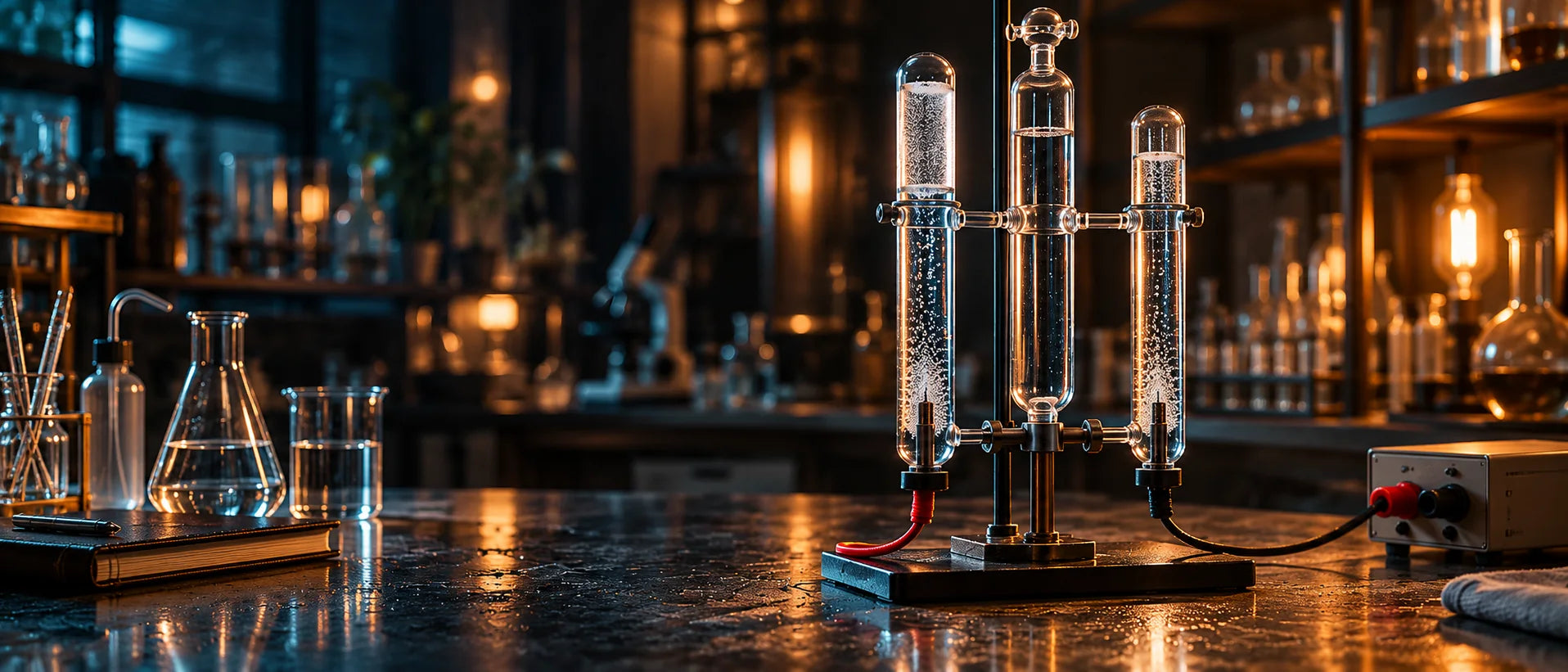
How a bottle makes hydrogen water
What actually happens when you press the button, what the thin membrane inside is for, and what a 2021 lab test found in the water afterwards.
Read the article
Safety · 6 min read
Is molecular hydrogen safe to drink?
What the FDA notice actually says, what a toxicology study tested, and where the evidence still has gaps.
Read the article
Oxidative stress · 5 min read
Hydrogen as a selective antioxidant
The 2007 paper that put molecular hydrogen on the research map, and why the word “selective” matters.
Read the articleFrom the research to your glass
Two ways to drink it.
On the go
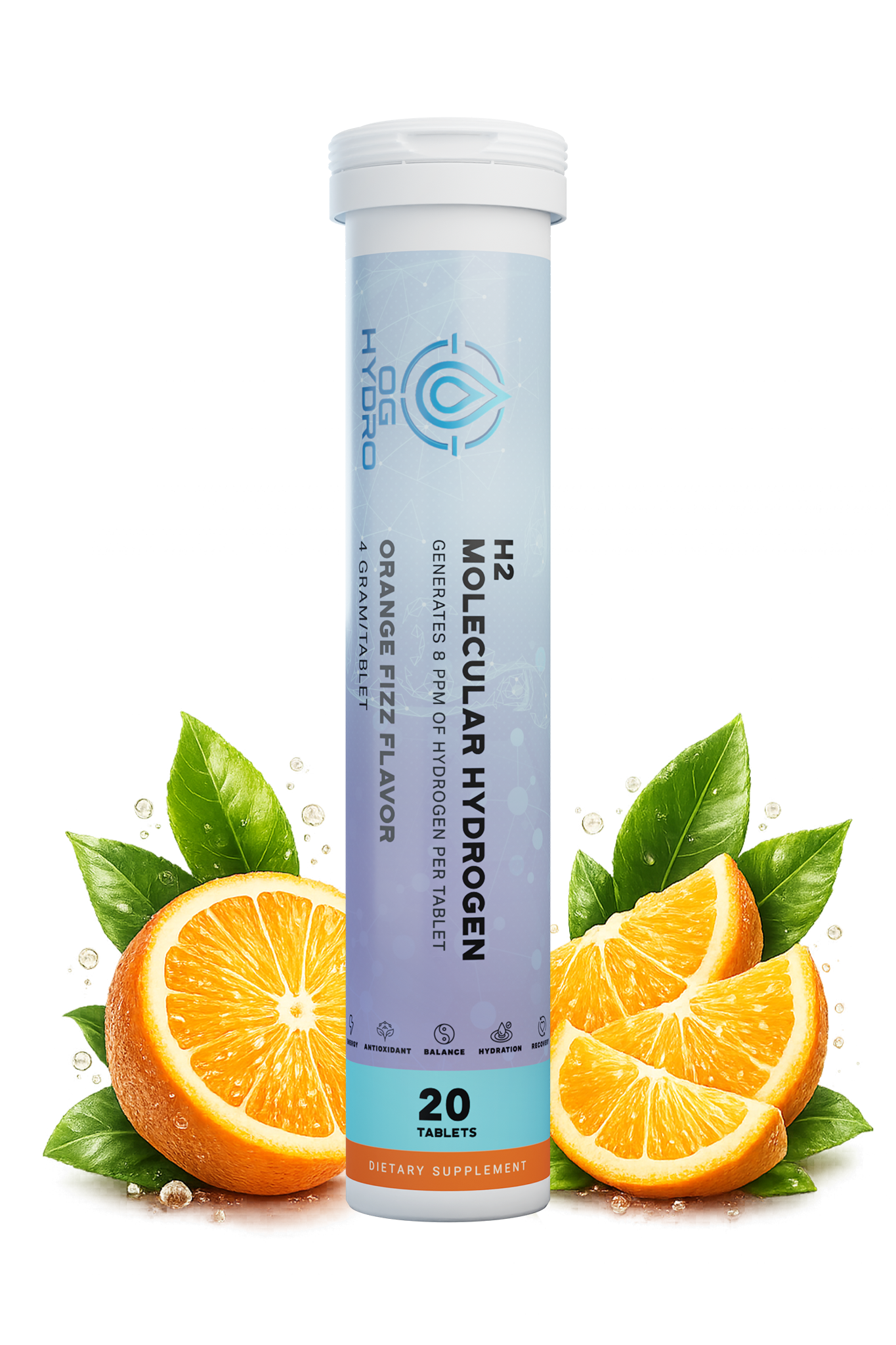
Hydrogen Tablets
Drop one into any glass of water. Six flavours, zero sugar, zero caffeine.
- 8 ppmH₂ per tablet
- 20per tube
- 6flavours
At home
The OG Hydro Bottle
Brews fresh hydrogen water on demand with lab-grade electrolysis. Nothing to repurchase.
- 5 ppmpeak per brew
- −500 mVantioxidant ORP
- 18–25uses per charge
